Your Smart Home Starts from "Structure": 4 Electrical Preparations You Must Not Forget Before Plastering
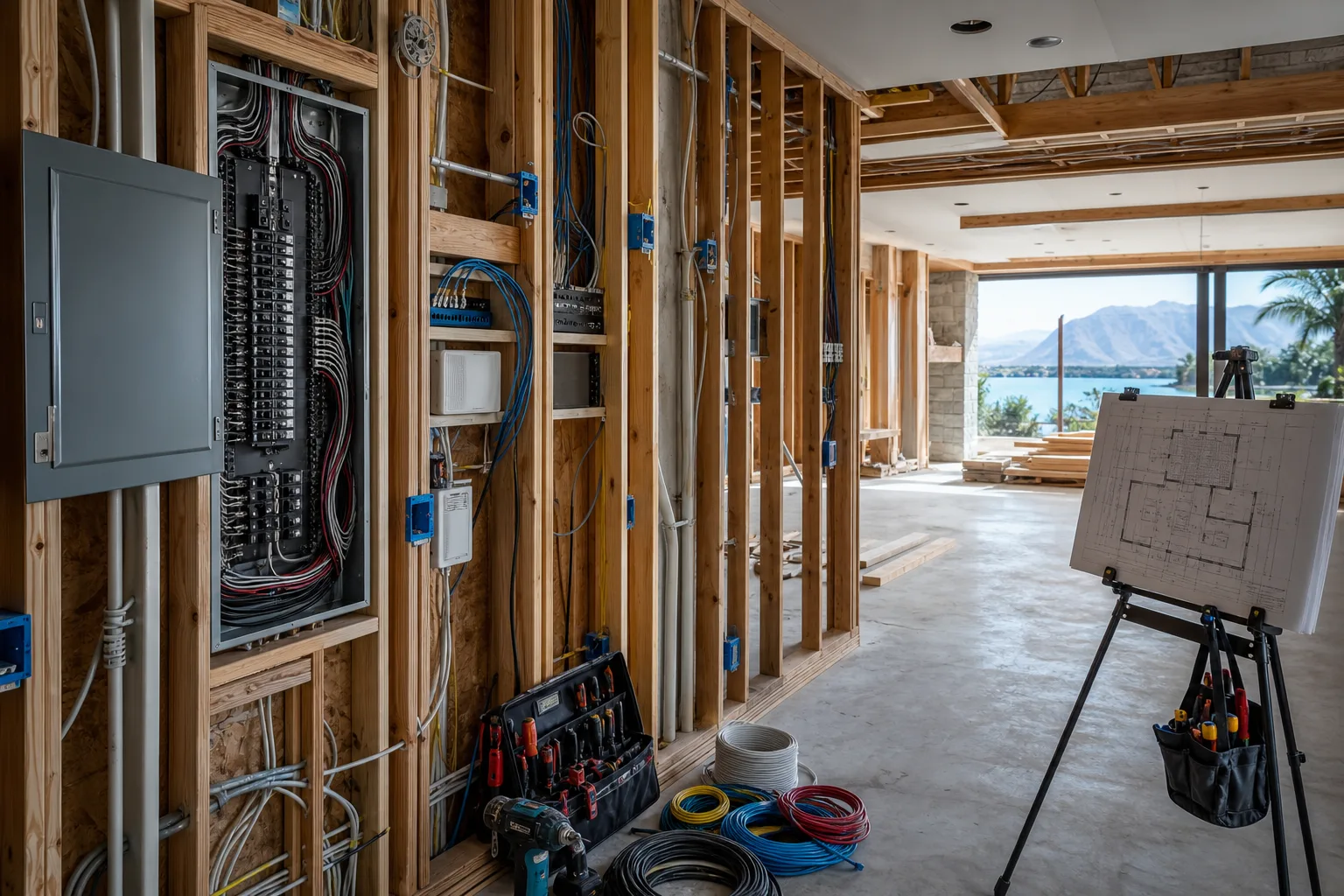
Do you think a "smart home" is just a luxury you buy after finishing? (like buying an Alexa device or smart bulbs)? The truth is that a real, stable smart home that serves you for years starts with planning from the foundation stage (structure and electrical).
Many clients decide to convert their home into a smart home after moving in, but they are shocked by the phrase: "There is no foundation, we need to break the wall to extend new wires." At True Draft, we adopt the principle of "designing for the future." Even if you don't have a budget for smart systems now, we prepare your home to be upgrade-ready at any time without breaking walls. Here are the most important foundations.
1. Neutral Wire: The Unknown Soldier
This is mistake number 1. Traditional electrical switches don't need a "neutral" line to work, but smart switches need it to stay connected to Wi-Fi even when the light is off. Make sure your foundation electrician pulls a neutral line to every switch box in the house. Without it, your options in smart systems will be very limited and expensive later.
2. Deep Electrical Boxes
Standard electrical boxes in the market are 3-4 cm deep. If you plan to install "smart relays" behind regular switches to make them smart, this space won't be enough and the wires will be crowded. Our advice: we always request the use of 7 cm deep boxes in the foundation. This gives you comfort and flexibility to install any smart component behind the switch in the future with ease.
3. Internet Network: The Ceiling is More Important Than the Wall!
In large concrete homes, Wi-Fi signals weaken and disconnect. The professional solution is not "signal boosters" that are placed in outlets, but access points installed in the ceiling like smoke detectors. Therefore, a network point (CAT6 cable) must be established in the ceiling of each floor or main corridor and connected to the central router location. This ensures strong internet coverage that runs all your smart devices and surveillance cameras without interruption.
4. Motorized Curtains
Controlling curtains by voice or via mobile is the peak of comfort and luxury. But the disaster happens when you want to install the motor and can't find a power source near the window! We ensure in our electrical plans to place a power point (outlet or wire exit) near the top corner of each large window, in anticipation of installing motorized curtains in the future.
Conclusion
A smart home is not just "voice commands", it's a strong infrastructure that provides you with energy, security, and luxury. The cost of these foundations during the structure stage does not exceed 1-2% of the cost, but adding them later may cost you disfiguring your home's decor.