Is Your Home Ready for Rain? Foam vs. Bitumen Insulation Comparison: Which Truly Protects Your Roof?
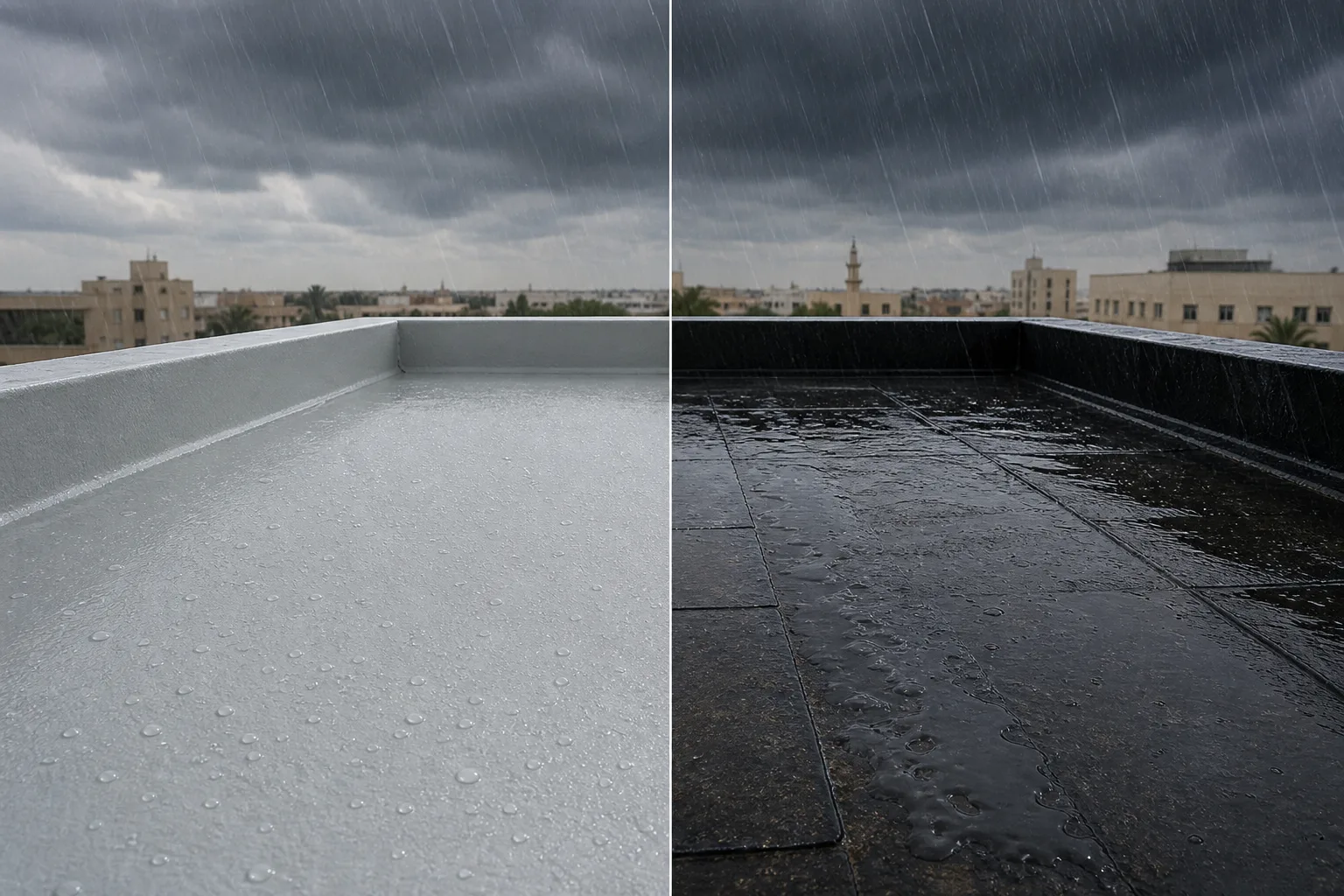
As winter approaches and the rainy season begins in Saudi Arabia, for some, "rain" turns from a blessing into a nightmare. Yellow spots on the ceiling, peeling paint, and a foul smell of moisture… these are all signs telling you that your home's roof insulation has failed.
At True Draft, we believe that insulation is not just a construction step, but the most important "protective shield" for your real estate investment. The question we always get: "Which is better? Traditional insulation (Bitumen/Rolls) or modern technology (Foam)?"
In this article, we provide a frank engineering comparison to settle this debate.
1. Traditional Insulation (Bitumen Rolls): The Old Guard
This is the most famous system for decades. It consists of black rolls that are spread and heated with fire to adhere to the surface.
- Pros: An economical and durable option if implemented with high thickness.
- Fatal Flaws: It relies on seams that may fail over time, and it is only waterproof (it absorbs heat) and needs an additional thermal insulation layer.
2. Foam Insulation (Polyurethane): Modern Technology
This is the system that has recently swept the Saudi market and is adopted by the Saudi Building Code. It is sprayed mechanically as a liquid material that expands and solidifies.
- One Piece (Seamless): No joints or seams; it covers the entire roof.
- 2-in-1 (Smart Saving): It is both waterproof and thermal insulation at the same time (saving electricity).
- Speed and Light Weight: It can be implemented in one day and does not pose a load on the roof.
- Cons: It needs a protective layer (Acrylic) from the sun.
True Draft's Golden Advice: When to Choose What?
- If you are building a new villa: Your best choice is "Foam Insulation" for its compliance with the code and energy saving.
- If you are renovating an old house: Foam or cementitious insulation can be used depending on the condition of the roof.
Do you suspect a leak in your roof?
Don't wait until water drops fall from the ceiling. Prevention is better (and cheaper) than cure. At True Draft, we use the latest materials to ensure a dry roof and a safe home throughout the winter.