Open (American) or Closed Kitchen? How to Settle the "Eternal Debate" in Your New Home?
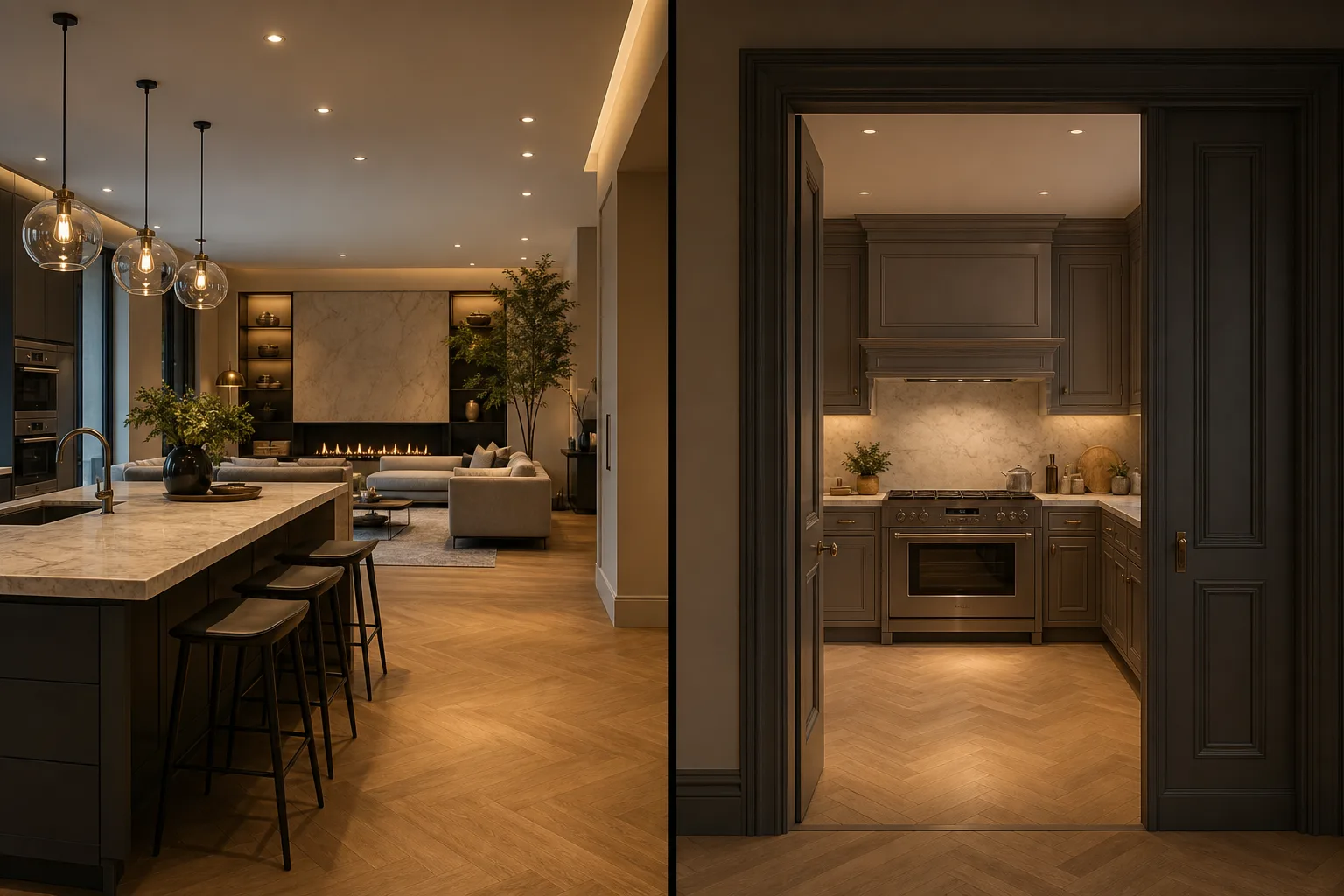
When we reach the kitchen design stage at True Draft, clients usually split into two teams: a team that loves the open kitchen for its beauty and spaciousness, and a team that sticks to the closed kitchen for fear of spreading smells and oils. Between "fashion" and "practicality", many fall into confusion. Do I take a risk and open the kitchen? Or do I stay safe and close it? The answer is not "yes" or "no", the answer depends on your cooking culture and your home's space. Here's the decisive comparison.
1. Open Kitchen (Open Concept): The Beating Heart of the Home
It's the integration of the kitchen with the living room or dining room, usually separated by an "island" or bar.
Why Will You Love It? (Advantages):
- Visual Spaciousness: Makes small apartments and villas look much larger and brighter.
- Family Communication: The mother is not isolated while cooking, but rather participates in family and children's conversation and watching TV.
- Aesthetics: The kitchen here is part of the living room decor, so it's designed with great care to be a "showpiece".
Why Might You Regret It? (Disadvantages):
- Smells: The smell of frying and cooking will spread to the living room sofa and curtains no matter how strong the exhaust fan is.
- Exposed Mess: Any unwashed dish or clutter will be visible to guests and those sitting in the living room all the time.
- Noise: The sound of the blender or dishwasher may interrupt the harmony of those sitting in the living room.
2. Closed Kitchen (Traditional): Privacy and Containment
It's the traditional independent kitchen with a door and walls.
Why Will You Love It? (Advantages):
- Smell Control: The closed door is the best insulator for heavy cooking smells.
- Freedom to Work: You can leave the kitchen in a mess during gatherings and close the door without guests seeing anything.
- Larger Storage Space: Having 4 walls means more space to hang upper cabinets.
Why Might You Get Bored of It? (Disadvantages):
- Isolation: The person cooking is completely isolated from the rest of the family.
- Narrowness: In small spaces, the closed kitchen may look like a narrow and stuffy "box".
The Smart Solution from True Draft: "Don't Choose.. Take Both!"
In the modern designs we adopt, we offer middle solutions that combine both advantages:
First: The Two-Kitchen System (Dirty & Clean Kitchen)
If space allows, we design two kitchens:
- Preparation Kitchen (Show Kitchen): Open to the living room, very elegant, dedicated to making coffee, sandwiches, and heating light food.
- Frying Kitchen (Dirty Kitchen): A small closed and hidden kitchen, dedicated to heavy cooking, frying, and grilling, with strong ventilation.
Second: Glass Partition
If space is small and doesn't allow for two kitchens, we use transparent glass partitions with an elegant metal frame (Metal & Glass Doors).
Result: You see the living room and feel spaciousness (advantage of open), but you prevent smells and noise (advantage of closed).
Conclusion
Before you break the wall, ask yourself: How many times do I cook per week? And what type of cooking? If your cooking is daily and heavy (kabsa, frying, strong spices), then the closed kitchen or two-kitchen system is your only option. But if your lifestyle depends on light and fast food, the open kitchen will add irresistible charm to your home.