The Magic of Lighting: How "Light Distribution" Transforms Your Home from Ordinary to Hotel Masterpiece?
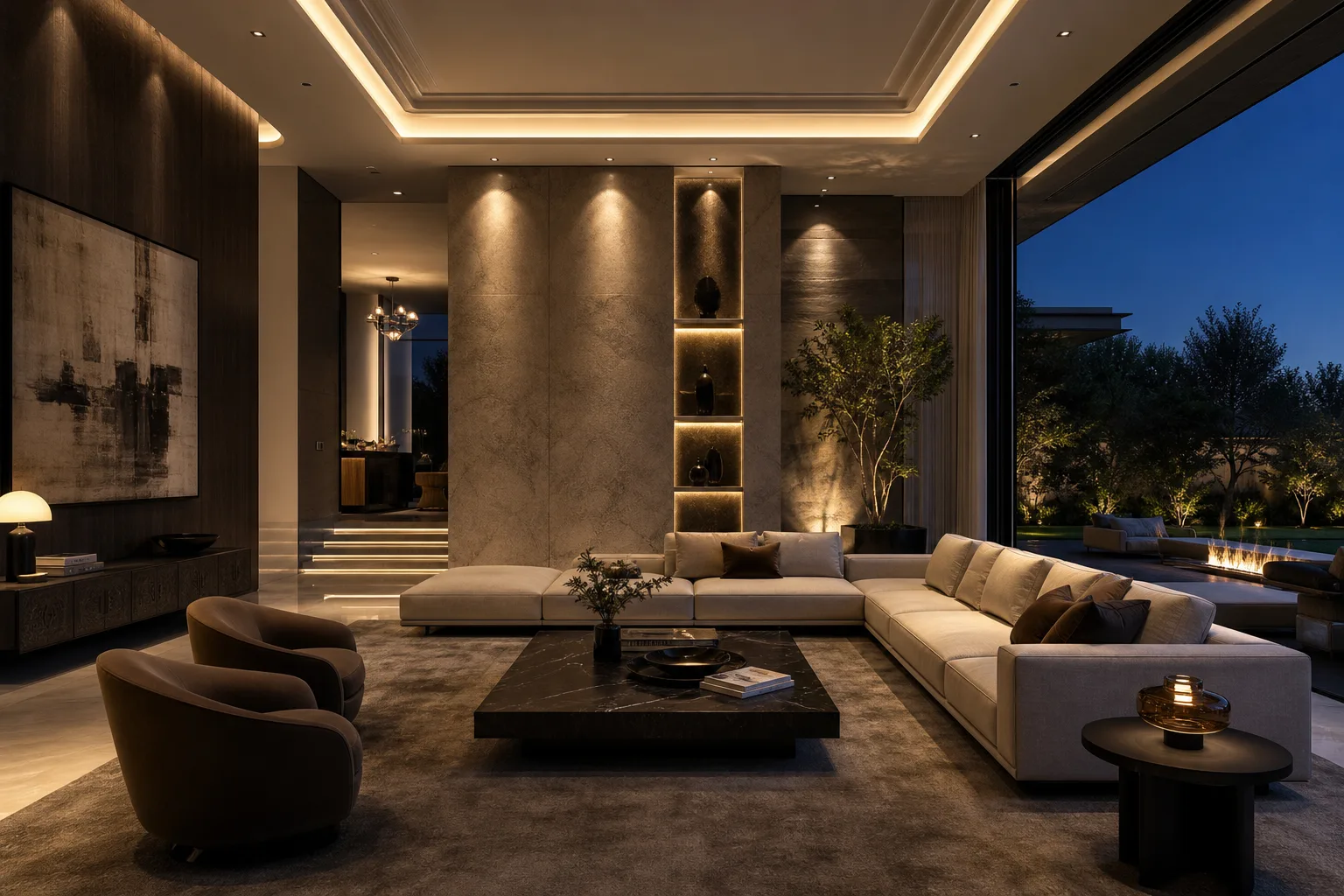
Have you ever entered a home or hotel and felt comfort and psychological calm immediately upon entering, without knowing why? The secret is usually not in the expensive furniture or the space of the place.. The secret lies in "lighting".
In the world of interior design, we consider lighting to be the "makeup" that highlights the beauty of architecture. The best finishing and most expensive furniture may look dull and cheap under bad lighting. At True Draft, we don't rely on random distribution of "spotlights" in the ceiling, but rather we create a thoughtful lighting plan. Here's how lighting affects your home.
1. Lighting is Layers, Not a Single Source
The common mistake is relying on a single strong source in the middle of the room (chandelier) or rows of spotlights. Proper lighting consists of three layers:
- Ambient Lighting: This is the basic lighting that illuminates the entire space (such as hidden spotlights or quiet chandeliers).
- Task Lighting: Focused lighting for performing specific tasks (such as lighting under kitchen cabinets for cutting, reading lamp, or lighting above bathroom mirror).
- Accent Lighting: This is the "magic touch". Used to highlight a piece of art, a plant, or a stone wall to emphasize its texture.
💡 True Draft Touch: We integrate these layers so you can control the "mood" of the room. Want to relax? Turn off the ambient and keep the accent. Want to work? Turn on the task lighting.
2. Light Color Temperature (Kelvin): The Battle of Yellow and White
Light color is measured in Kelvin, and choosing the wrong one can kill the beauty of your home:
- Bright White (6500K): Avoid it in homes! This color gives a feeling of hospitals or commercial offices and kills the warmth of the home.
- Solar White (4000K): A neutral color and excellent for kitchens, bathrooms, and study/work rooms where you need to see colors clearly.
- Warm Yellow (3000K): This is the preferred color for hotels and luxury homes. It gives a sense of calm and comfort, and is best suited for bedrooms, reception rooms, and living rooms.
3. Hidden Lighting: Quiet Luxury
The modern trend in 2025 is to hide the light source. The eye rests when it sees the light but not the lamp. Using LED strips inside gypsum recesses, behind mirrors, or in floor baseboards (skirting), gives the space spaciousness and luxury, and reduces the annoying glare to the eye.
Catastrophic Mistakes in Light Distribution to Avoid:
- "Swiss Cheese" Effect: Too many spotlight openings in the ceiling make it deformed. The rule is "less is more".
- Annoying Shadows: Placing spotlights directly above the seating area causes strong shadows on the face that make the seated person look tired. It's better for the lighting to be directed at walls or tables.
- Neglecting Dimmers: The ability to dim and brighten the light is a technically simple feature but has a great impact on the atmosphere.
Conclusion
Lighting is not just "electricity", it's design and art. A modest home with smart and thoughtful lighting may look much more luxurious than a palace with bad commercial lighting.